
For decades, the automotive and logistics industry was considered a predominantly male field. However, the talent, strategic vision, and leadership skills of many women have profoundly transformed the sector. Today, in a context where supply chain efficiency defines global competitiveness, the role of women is more visible and decisive than ever.
In celebration of International Women’s Day, we recognize some of the leaders who have blazed a trail in logistics, automotive manufacturing, and global supply chain management. Their careers have not only broken new ground but have also demonstrated that diversity in decision-making strengthens innovation and operational resilience.
Below, we introduce five women who have made a significant impact on the evolution of the industry.
- Bertha Benz

When discussing the birth of the automotive industry, the name Bertha Benz plays a pivotal role. As the wife and driving force behind engineer Karl Benz, Bertha not only supported the development of the first functional automobile but also played a leading role in one of the most significant moments in the history of transportation.
In 1888, he made the first long-distance car trip in history, driving the Benz Patent-Motorwagen, a vehicle developed by Karl Benz. The journey, covering approximately 106 kilometers between Mannheim and Pforzheim in Germany, demonstrated that the automobile could be a viable means of transportation.
During the journey, Bertha overcame several technical challenges along the way, devising practical solutions that are now standard features of automotive engineering, such as the first brake pad system and improvements to the fuel system. Her initiative not only proved the vehicle’s functionality but also marked the beginning of modern mobility, which would later give rise to industrial giants such as Mercedes-Benz.
Bertha Benz’s legacy shows that, ever since the automobile’s inception, women have played a leading role in technological innovation and the evolution of global mobility.
2. Mary Anderson
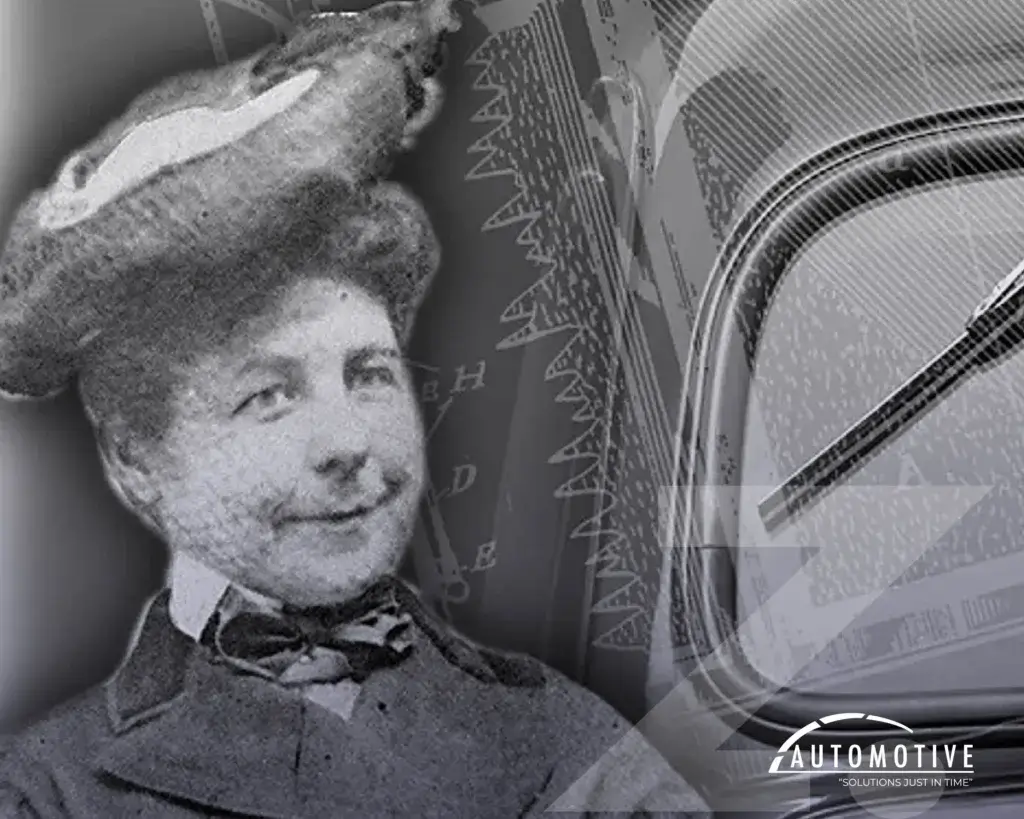
In the early 20th century, Mary Anderson identified a problem that affected the safety of early automobiles: drivers had to constantly stop to wipe their windshields when it rained or snowed.
Anderson noticed that streetcar drivers often had to open the windows to see in bad weather, sometimes even stopping the streetcar to go outside and clean the glass. His idea involved a lever inside the vehicle that controlled a spring-loaded arm with a rubber wiper blade. The lever, equipped with a counterweight to keep the wiper in contact with the window, could move the blade across the windshield, clearing away rain or snow.
In 1903, he patented the first manually operated windshield wiper system, a mechanism that allowed the driver to clean the windshield from inside the vehicle without stopping.
In 1922, Cadillac began installing windshield wipers as standard equipment in its cars. Although manufacturers were initially skeptical of their usefulness, as the automotive industry grew, the system became indispensable.
Today, windshield wipers are an essential safety feature in all vehicles, demonstrating how a simple solution can have a lasting impact on modern mobility.
3. Florence Lawrence
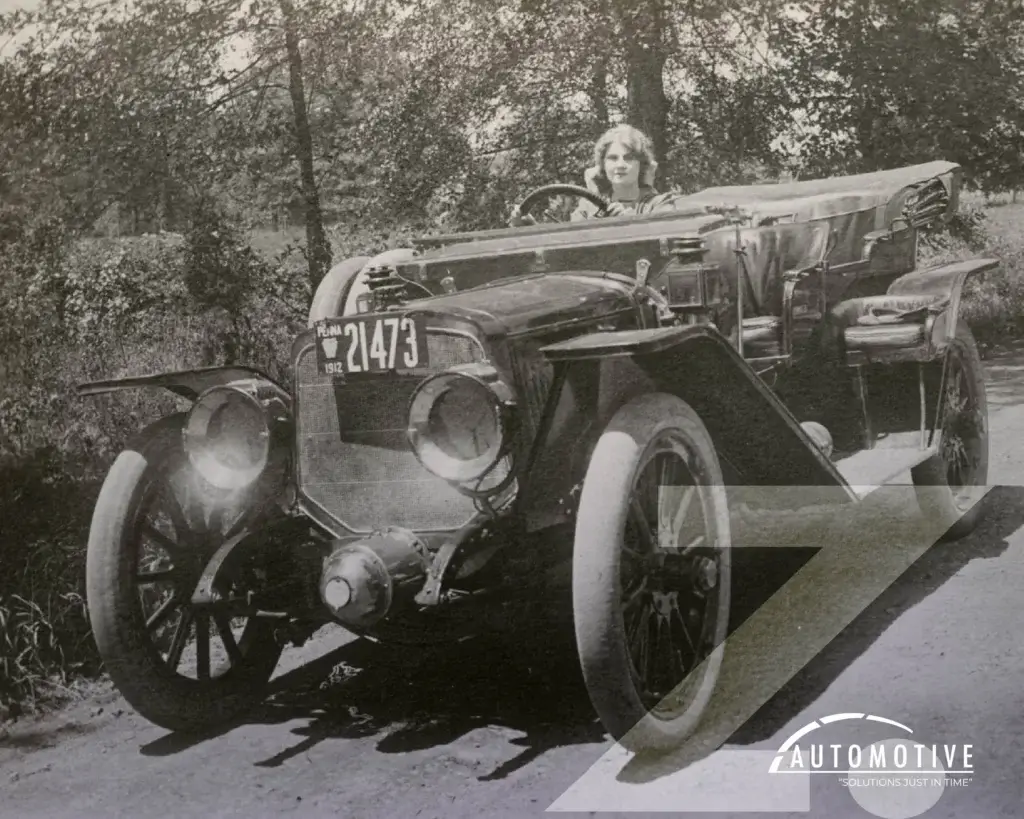
Florence Lawrence was a Canadian-American actress and a pioneer of silent film, considered the first “movie star” to be recognized by name. Her fame helped establish the Hollywood star system, and she was also noted as the inventor of basic traffic signals.
The daughter of vaudeville actress Lotta Lawrence, she made her stage debut at the age of three as “Baby Flo.” Although her face was widely recognized, production companies kept the identities of the performers a secret. In 1910, producer Carl Laemmle signed her to the Independent Moving Pictures Company and promoted her under her own name—an unprecedented move that marked the birth of star culture.
Passionate about cars, she was an inventor ahead of her time in the automotive industry. In 1914, she developed two innovations that revolutionized communication between drivers: the first mechanical turn signal system and a signal to indicate when a vehicle was braking.
Lawrence devised an electrical system that raised a flag to signal turns and another that displayed the word “STOP” when braking—precursors to modern turn signals and brake lights.
Although his ideas were never formally patented, these concepts became the foundation for the traffic signal systems that today enable safer and more coordinated driving on roads around the world.
4. Alice Huyler Ramsey
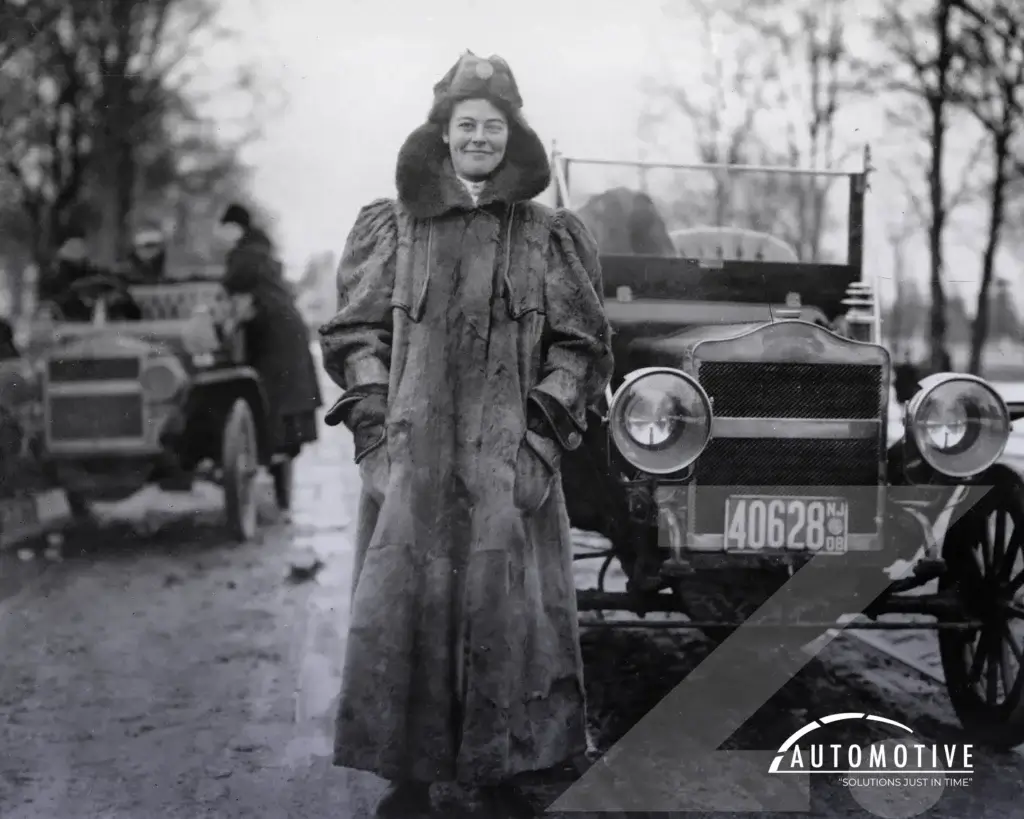
Alice Huyler Ramsey (1886–1983) was an American automotive pioneer and the first woman to drive a car across the United States. Her 1909 journey symbolized women’s growing participation in automotive culture and their right to independent mobility.
On June 9, 1909, at the age of 22, Ramsey set out from Manhattan with two sisters-in-law and a friend. Over the course of 3,800 miles, they traversed dirt roads, crossed rivers without bridges, and faced adverse weather conditions. Ramsey was the group’s sole driver and mechanic: she changed eleven tires, repaired brakes, and fixed breakdowns. They arrived in San Francisco on August 7, after nearly two months of travel.
The expedition was sponsored by the Maxwell-Briscoe Motor Company, which sought to demonstrate the reliability of its vehicle and the capabilities of women behind the wheel. Ramsey’s journey became a media sensation that challenged gender stereotypes and reinforced the idea of women as competent drivers.
Ramsey continued to drive throughout her life, completing more than thirty cross-country trips. She published her memoirs in Veil, Duster and Tire Iron (1961) and was named “Woman Motorist of the Century” by the AAA in 1960. Her boldness laid the groundwork for the social acceptance of women drivers and continues to inspire subsequent generations.
5. Clärenore Stinnes
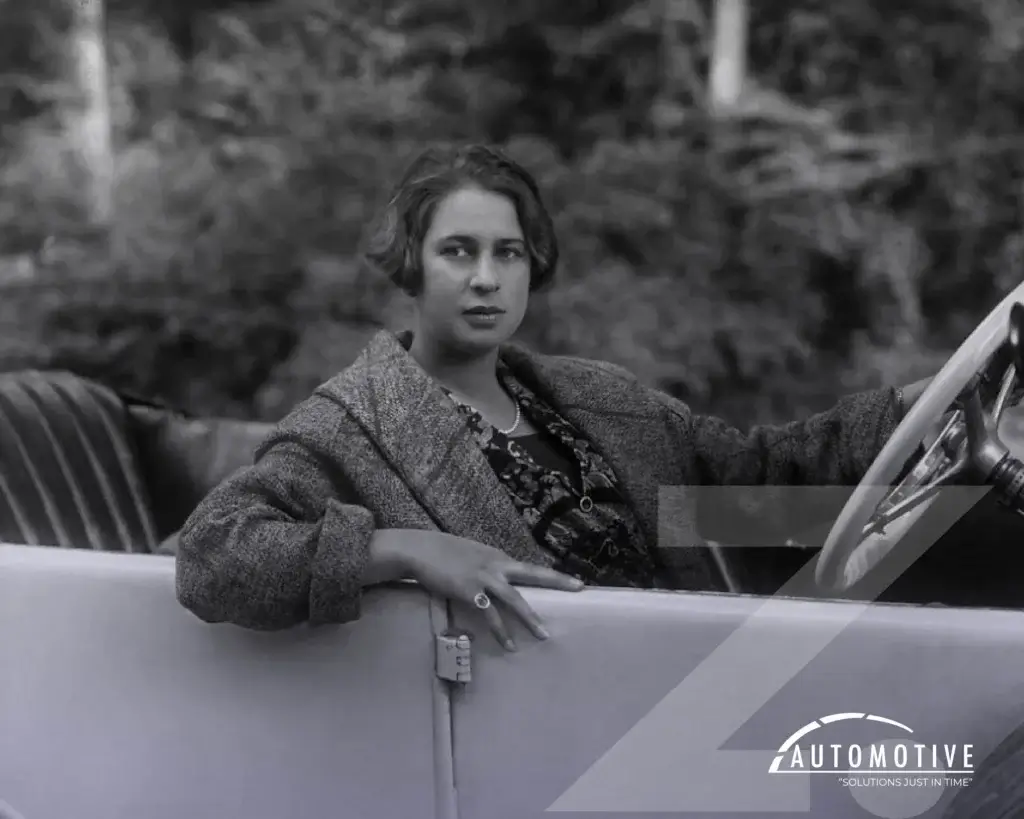
Clärenore Stinnes (1901–1990) was a German race car driver, filmmaker, and writer, best known for being the first woman to drive around the world between 1927 and 1929. Her journey marked a milestone in the history of exploration and women’s motorsports.
She grew up in an industrial family and began her racing career after her father’s death. Between 1924 and 1926, she was one of the most successful female racers in Europe. In 1927, she set out on a round-the-world trip with Swedish cameraman Carl-Axel Söderström in an Adler Standard 6 automobile, sponsored by Adler-Werke and several German companies. The trip lasted more than two years and covered nearly 46,000 km, traversing roadless regions in Asia, America, and Europe.
The expedition began in Frankfurt on May 25, 1927, and culminated in her triumphant return to Berlin on June 24, 1929. It was the first round-the-world trip by car led by a woman. During the journey, they filmed footage that later became the documentary Im Auto durch zwei Welten, directed by Stinnes herself. Her courage challenged gender stereotypes and demonstrated the technological potential of the German automotive industry.
A more diverse future for a stronger industry
Today, as we look back and acknowledge the journey undertaken by so many women in the automotive industry, it is clear that their contributions have not been merely incidental, but profoundly transformative. From those who drove the earliest technological advancements to those who today lead complex global supply chains, women have demonstrated that innovation, resilience, and strategic vision know no gender.
In a sector that has historically been challenging, their presence has meant much more than inclusion: it has represented progress. Every idea implemented, every process optimized, and every barrier overcome has helped build an industry that is more efficient, more humane, and more aware of its global impact.
Today, women’s role in automotive logistics is not only significant—it is indispensable. In an environment where decision-making requires adaptability, systems thinking, and collaborative leadership, women bring perspectives that enrich the way operations are designed and executed. Their ability to build teams, anticipate risks, and develop sustainable solutions has become a strategic asset for organizations.
But beyond their professional impact, it is also important to recognize the value of the independence that defines a new generation of women today. An independence that is reflected not only in their ability to hold leadership positions, but also in their freedom to choose, innovate, take initiative, and redefine their place within traditionally rigid industries. This transformation not only benefits women but also strengthens the entire industry by making room for a diversity of ideas, experiences, and talents.
Celebrating International Women’s Day is, therefore, much more than just looking back at the past: it means acknowledging the present and committing to a future where equality is not a goal, but an established reality. A future where more women participate in decision-making, lead high-impact projects, and continue to drive the evolution of mobility and logistics on a global scale.