
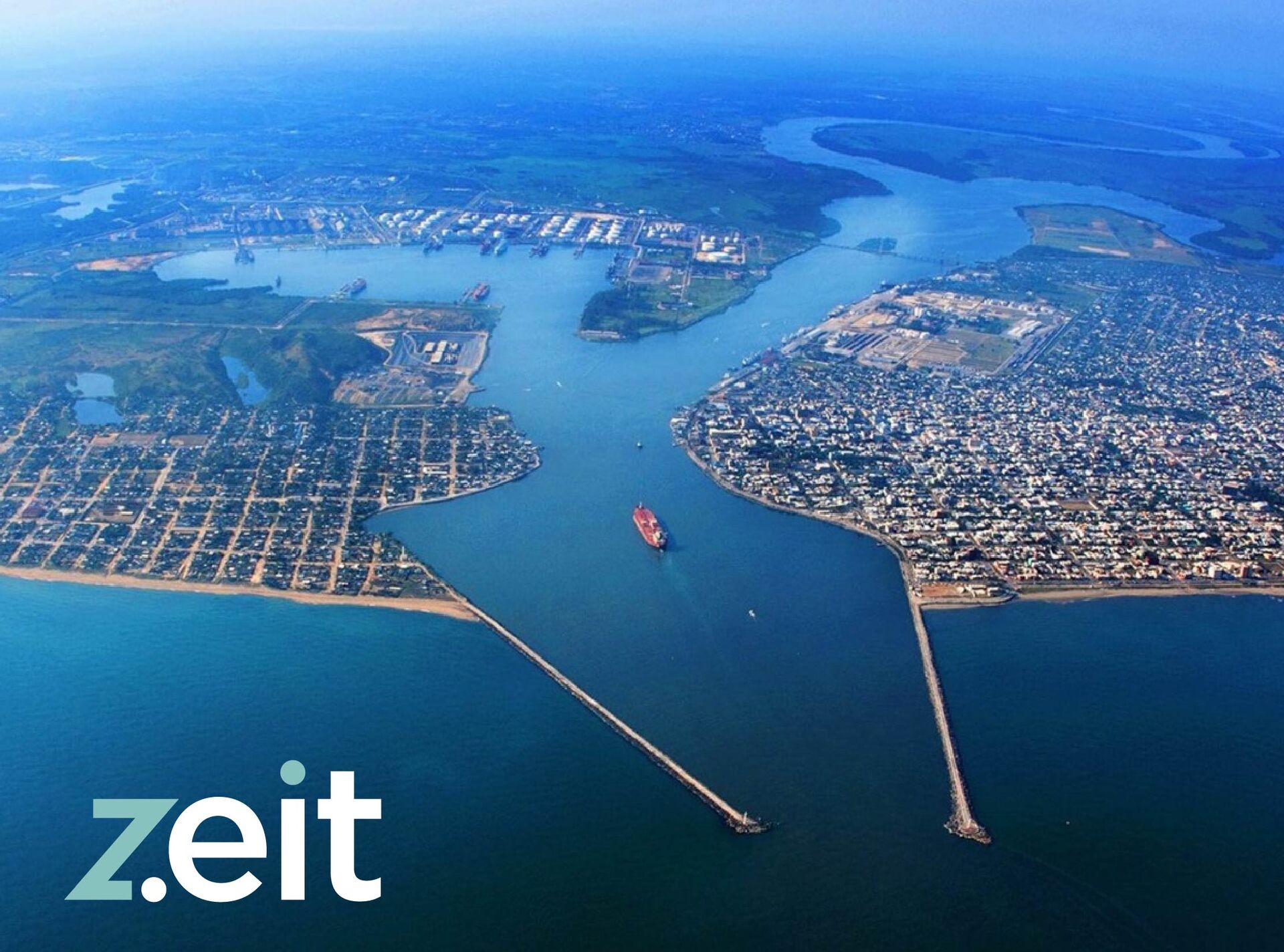

The current challenges facing the Panama Canal—that marvel of engineering that opened in 1914 and handles about 5% of global maritime trade.
So far this year, the number of ships able to transit this waterway has decreased significantly due to a shortage of water for the locks. The canal authority also limits the depth to which a ship’s hull can submerge—known as draft— which significantly reduces the weight the vessel can carry and leads to excessive cost increases and delivery delays—the most recent example of how crucial parts of global supply chains can abruptly disrupt the flow of operations.
Without a new water source, the canal could lose significant amounts of business. Other ocean routes are, of course, longer and more expensive, but they are less likely to experience unpredictable delays.
One possible alternative was to transport goods between Asia and the United States via the Suez Canal to the East Coast and the Gulf Coast; however, this also presents problems…
Commercial ship traffic through the Suez Canal, which connects the Red Sea to the Mediterranean, fell by 30% in January as a result of crossfire between Yemeni Houthi rebels and the United States.
In recent weeks, many shipping companies have chosen to avoid the Red Sea—a vital trade route between Asia and Europe—and have been forced to sail around the southern tip of Africa and pass through the Cape of Good Hope, incurring enormous additional costs as well as adding ten to twelve days to their voyage.
An alternative offering a cheaper and shorter route could emerge from within Mexico itself: the Interoceanic Corridor in Mexico.
The Interoceanic Corridor of the Isthmus of Tehuantepec is emerging as the best alternative to the Panama Canal and the Suez Canal in light of current conflicts; it represents an incredible opportunity for us to position ourselves as leaders in global trade.
Let’s remember that this project isn’t entirely new; part of the infrastructure that will be used for this corridor—specifically the railroad tracks—was inaugurated 116 years ago, in 1907, by President Porfirio Díaz.
Taking advantage of the strategic location of the Isthmus of Tehuantepec—the narrowest point in North America—the Corridor creates a multimodal logistics platform that connects the Pacific Ocean with the Atlantic Ocean.

Source: Government of Mexico
The logistics platform integrates the ports of Salina Cruz, Coatzacoalcos, Dos Bocas, and Puerto Chiapas. It provides access to the southern United States, Europe, the Americas, and Asia—all of which serve as hubs connecting the Pacific and Atlantic Oceans, facilitating trade both domestically and internationally.
They are linked to a network of more than 1,200 km of rail lines connecting the states of Chiapas, Oaxaca, Tabasco, and Veracruz, as well as highways and airports. Thanks to this connectivity, supply chains are optimized and the region’s strategic position in the world is strengthened.
The Interoceanic Corridor represents a tremendous opportunity to position ourselves as leaders in global trade, and it will also be a major magnet for investment, offering tax incentives, a free-trade zone, customs zones, tariff reductions, a one-stop shop for paperwork, as well as the development of residential areas and nature reserves.
The CIIT will connect Mexico with the United States, South America, Asia, and Europe

Source: Government of Mexico
Mexico is ideally located for business, serving as a natural bridge between the Atlantic and the Asia-Pacific region thanks to its extensive coastline. The Isthmus of Tehuantepec, with a distance of 300 km between the Pacific Ocean and the Gulf of Mexico, offers a strategic location for interoceanic transport and the shipment of products to the continent and the world.
A wide range of areas must be addressed to ensure the optimal development and success of the CIIT, including the following:
- Improvements to highways and rural roads
- Gas pipeline construction
- Modernizing airports to convert them into cargo terminals
- Installation of fiber-optic infrastructure throughout the project to strengthen digital connectivity
- Ensure safety along this overland route with regard to crime, roadblocks, or the risk of natural disasters in the area.
- Construction of breakwaters and dredging to deepen the draft at the ports of Coatzacoalcos and Salina Cruz, which would allow state-of-the-art ships to dock.
The project to connect Mexico’s two coasts is quite appealing and exciting; however, the lack of information is fueling speculation. Nevertheless, Mexico may be on track to position itself as a potential solution to a global problem.