
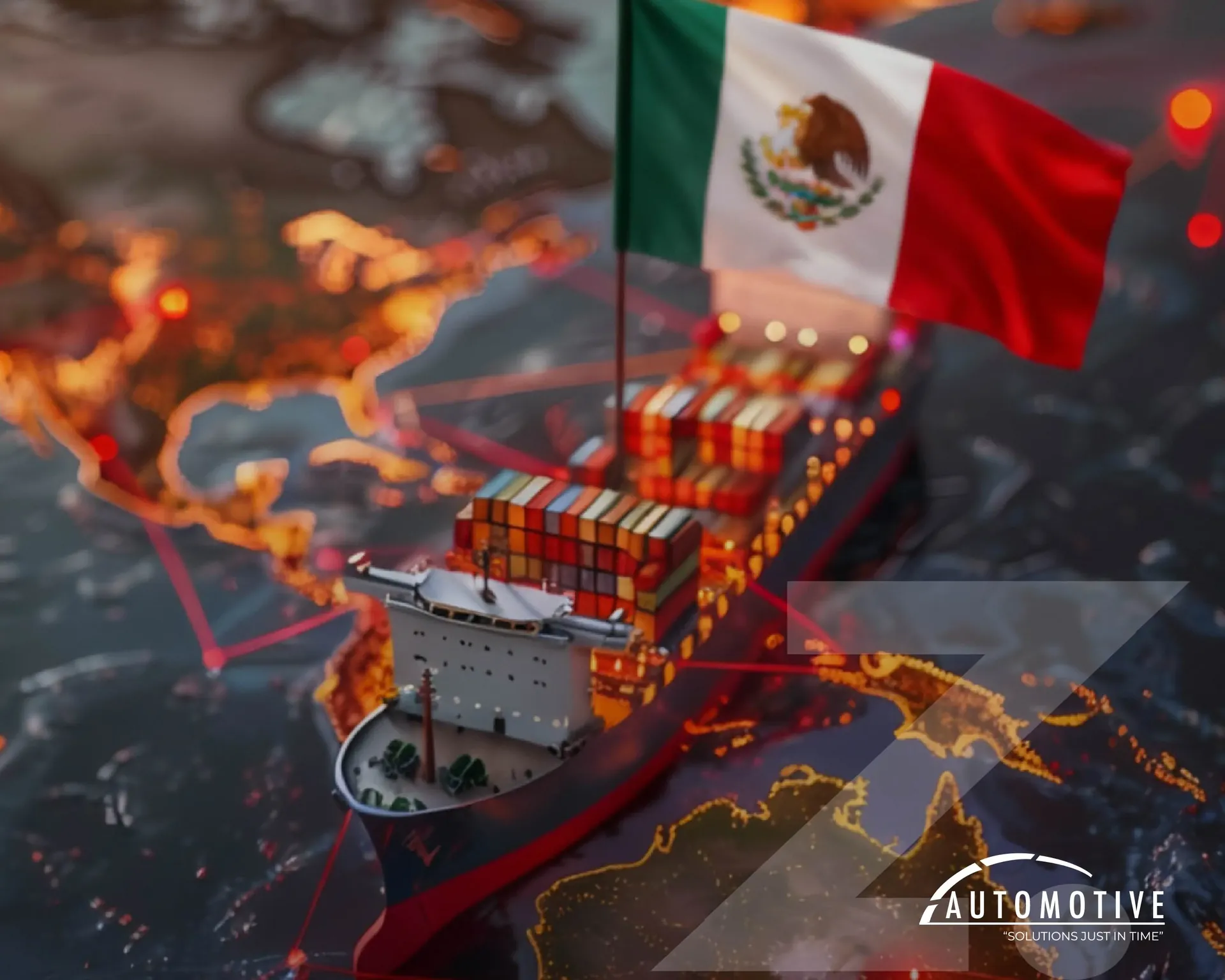
The Mexican logistics industry enters 2026 transformed by the convergence of three forces: the digitization of operations, the environmental demands of major manufacturers, and the pressure of nearshoring on installed capacity. Anticipating these trends is not optional—it’s the difference between growing with the market or falling behind.
Real-time visibility as the standard
GPS tracking of vehicles was a competitive advantage for years. In 2026, it is the bare minimum expected. Industrial customers—especially those in the automotive sector—demand end-to-end visibility: from the moment the cargo leaves the plant until it reaches its final destination, with automatic alerts for any deviation or delay.
Transportation management systems (TMS) that integrate vehicle telemetry, customs APIs, and real-time notifications have become the central nervous system of modern 3PL operators.
Electrification and Sustainability in Fleets
Emissions from ground transportation account for a growing portion of the sustainability goals of major automakers. By 2026, companies such as Volkswagen, BMW, and Tesla will require their logistics providers to submit carbon footprint reports for each shipment.
Operators who have begun integrating electric or hybrid vehicles into their urban fleets—and calculating emission factors by route—are positioned to win contracts with the most environmentally demanding OEMs.
From 3PL to 4PL: Comprehensive Management of Complex Supply Chains
The traditional 3PL model—where an operator handles transportation, warehousing, and customs clearance reactively—is being replaced in the most sophisticated contracts by the 4PL model: an integrator that designs, orchestrates, and optimizes the client’s entire supply chain, coordinating multiple specialized suppliers.
This shift requires capabilities in data analysis, risk management, and strategic planning that go beyond day-to-day operations. This is the direction logistics operators aiming to grow alongside the Bajío automotive region are heading.
Expanding Critical Infrastructure
The Interoceanic Railway of the Isthmus of Tehuantepec, the expansion of the Port of Manzanillo, and the modernization of the border crossings in Nuevo Laredo and Ciudad Juárez are projects that will come to fruition between 2026 and 2028. For logistics operators, understanding these emerging corridors and positioning themselves within them in advance is a strategic mid-term investment.
The future of Mexican logistics has already begun. The companies building it today will be the ones defining the market rules in the coming decade.