
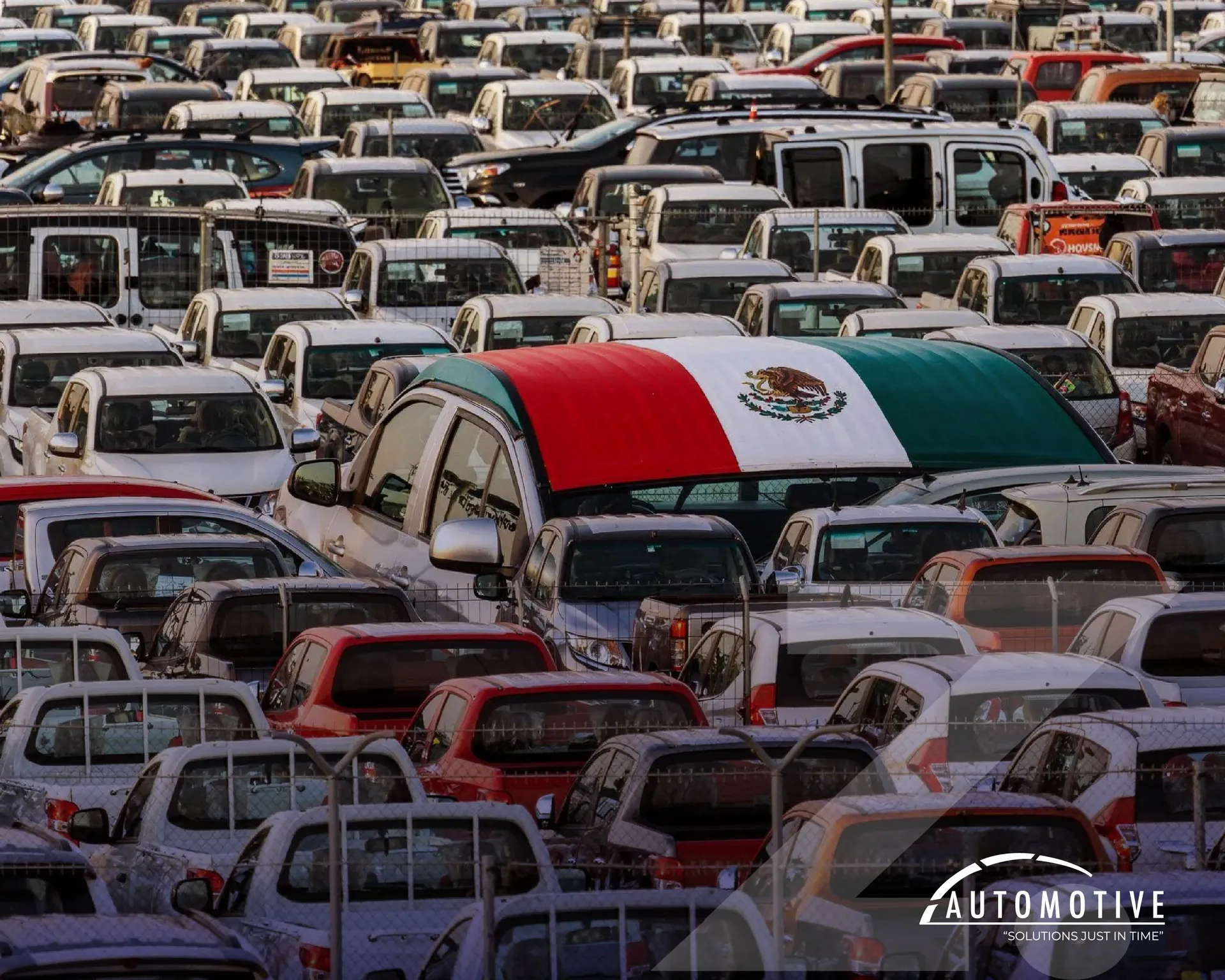
Mexico begins 2026 in a privileged position within the global automotive industry. The convergence of the USMCA, the nearshoring phenomenon, and the maturity of its industrial logistics corridors position the country as the most attractive destination for the relocation of manufacturing capacity in North America.
The Nearshoring Effect on the Automotive Industry
Since 2022, more than 400 companies in the automotive supply chain have announced investments in Mexico. The Bajío region—led by Guanajuato, Querétaro, and San Luis Potosí—accounts for the majority of these projects, followed by Nuevo León and Coahuila in the northern border region.
The reasons are structural: competitive labor costs, proximity to ports of entry into the United States, well-established rail and highway infrastructure, and preferential market access under the USMCA.
USMCA 2026: More Stringent Rules of Origin
The trade agreement between Mexico, the United States, and Canada establishes new regional content thresholds for light-duty vehicles by 2026: 75% of the value of components must originate in North America, with specific requirements for steel, aluminum, and auto parts.
This compels manufacturers to deepen their supply chains within the region—and makes logistics operators like Grupo Zeit strategic partners for managing material flows between plants in Mexico, suppliers in the Bajío region, and assemblers in the United States.
The Critical Corridors of 2026
The three busiest corridors in the first half of 2026:
Querétaro–Laredo: The main land route for auto parts bound for assembly plants in Texas and the U.S. Midwest. Average transit time: 14–18 hours from plant to border.
Manzanillo–Querétaro: A maritime route for Asian-sourced inputs—specialty steel, electronics, battery components—that enter the country through the Port of Manzanillo and are distributed to plants in the Bajío region.
Monterrey–Saltillo–Ramos Arizpe: This corridor concentrates the production of pickup trucks and SUVs by GM, Stellantis, and KIA, with high-volume customs brokerage operations in Nuevo Laredo and Matamoros.
What to Expect in the Second Half of the Year
The investment pipeline projects that between July and December 2026, between 40 and 60 new auto parts plants will begin operations in the Bajío region. This will put pressure on local transportation capacity, especially along routes to ports and border crossings.
Companies that already have framework agreements with certified logistics operators—capable of scaling up quickly—will be best positioned to capitalize on this opportunity.